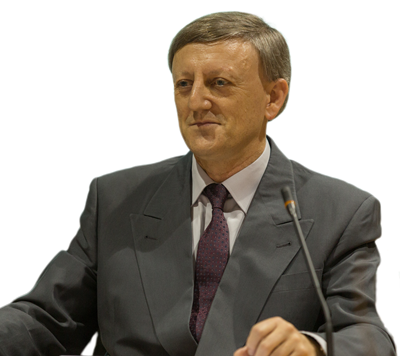
Prof. Alexander Kusenko
University of California, Los Angeles, USA
Bio: Alexander Kusenko is a Distinguished Professor of Physics and Astronomy at UCLA. He also holds an appointment of Senior Fellow at the Kavli Institute for the Physics and Mathematics of the Universe (IPMU) at the University of Tokyo. He is an Associate Editor of Reviews of Modern Physics, the most highly cited journal published by the American Physical Society. Kusenko is a Fellow of the American Physical Society (elected in 2008 “for original and seminal contributions to particle physics, astrophysics, and cosmology”). In 2021, Kusenko was named a Simons Fellow in Theoretical Physics. He received an Outstanding Referee Award from the American Physical Society (2012). He has served as a general member of the board of the Aspen Center for Physics for three five-year terms (2004-2019). Website: https://kusenko.physics.ucla.edu
Title: Effective, Evidence-based Use of AI in Undergraduate Courses
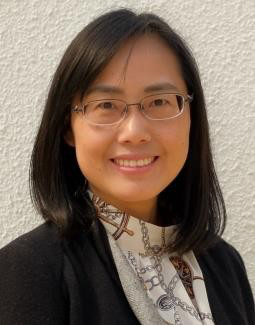
Asst. Prof. Susannah SUN CHUNRONG
University of Saint Joseph, Macao
Bio:Dr. SUN is an Assistant Professor in School of Education in the University of Saint Joseph. She got her Doctoral degree major in Early Childhood Education (ECE) from The Education University of Hong Kong. Before that, she worked as a lecturer in Qujing Normal University for nearly 5 years in Mainland China. She taught many courses in pre-service and in-service teachers' training programmes, including Introduction to Education, Curriculum Development, Teaching Methods in ECE, Language / Health / Society / Science Education in Kindergarten. Her research interests cover a range of topics in education, including early language and literacy develop and learning, teaching and learning in the early years, teachers' beliefs and professional development, etc.
Title: To be announced
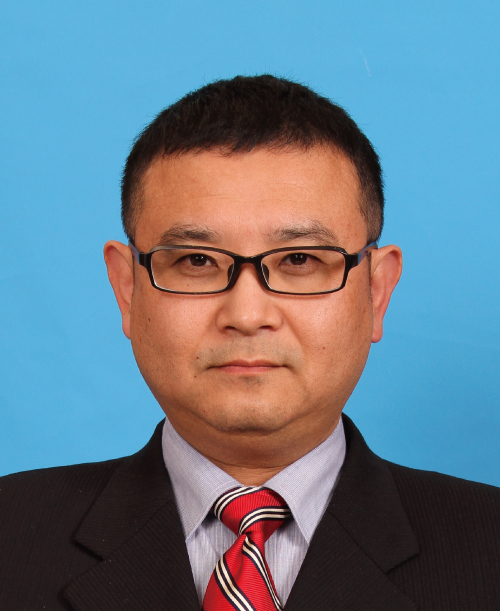
Assoc. Prof. Yutaka Naito
Sojo University, Japan
Bio: Yutaka Naito is an associate professor in the Faculty of Computer, Information and Science at Sojo University and holds a Ph.D. in Engineering for his research on P2P (Peer-to-Peer) networks. In recent years, he has been working to build mechanisms that enable diverse local stakeholders to collaborate in an autonomous and decentralized approach. This effort is based on the “Social Community Brand (SCB)” theory, which applies P2P and ICT concepts to regional revitalization and the development of human resources capable of generating innovation. Specifically, he is conducting research to develop, in a low-cost and sustainable way, an educational platform where industry, government, and academia—including local governments, companies, and universities—collaborate by contributing their respective human, material, and intellectual resources to implement Project-Based Learning (PBL) for college students. Before becoming a researcher, he had a long career as a local government officer, gaining extensive practical experience in areas such as the Board of Education, international relations, and regional development. By integrating the experience and professional networks he cultivated through these administrative roles with his research insights on SCB, he is advancing the development of a unique regional education platform where diverse stakeholders from industry, government, and academia collaborate autonomously.